

LAGIKWAY
(Abelmoschus manihot)
Lagikway, often mistaken for saluyot due to its slimy consistency, but it offers a more neutral and versatile taste suitable for diverse dishes beyond traditional sour preparations like sinigang or laing. As a semi-perennial shrub, Lagikway thrives year-round across the Philippines, adapting to various shapes and sizes, and is generally recognized by its green leaflets or “fingers.” Its shelf life, if stored properly in the refrigerator with tissues or a paper bag, is 2 weeks.
Warm your soul with Sinigang na Baboy, a beloved Filipino sour soup designed for 4-6 servings. This hearty dish features tender pork spare ribs simmered to perfection with a vibrant medley of fresh vegetables, including string beans, eggplant, and lagikway. The tangy broth reates a refreshingly savory and authentic Filipino culinary experience.
Ingredients:
4, 1/4 cups of water
2 cups of pork spare ribs cut into chunks (or any preferred meat)
1 pc red onion, quartered
8 pcs string beans, sliced into 2” pieces
250 g lagikway stalk and leaves
1 pc eggplant, sliced
2 pcs green chili
1 (20g) pack Sinigang sa Sampalok Mix Original
Instructions:
- Wash the pork spare ribs in cold running water. Then, submerge the pork ribs in a medium pot with a liter of water. Bring it to a boil without a lid, allow the scum to float to the surface, using a slotted spoon or a spatula to remove the scum.
- When the broth clears up, turn the heat to medium setting, then add the onions and tomatoes. Cover the pot and let it fully simmer to cook. Use a fork to pierce the meat so that the flavor can also enter the meaty parts of the spare ribs, and also to check if the meat is tender.
- Add the vegetables, start with sitaw, kangkong, stalks, and talong into the pot and cook until these turn dark green, then add the lagikway. This should be done within 2-3 minutes.
- Add in your siling singang, kangkong leaves, and the Knorr Sinigang sa Sampaloc Mix. Stir and let it simmer. It should be done in about 2-3 minutes.
- Transfer to a serving bowl.
Experience the rich and creamy flavors of Laing Lagikway, a classic Filipino dish perfect for 6-8 servings. Tender lagikway leaves are slow-cooked in a luxurious blend of coconut milk and cream, infused with savory pork, aromatic ginger, garlic, and a hint of shrimp paste. This comforting and mildly spicy dish offers a true taste of traditional Filipino cuisine, perfect for a cozy meal.
Ingredients:
3.5 oz lagikway
6 cups coconut milk
2 cups coconut cream
½ cup shrimp paste
½ lb pork shoulder
5-7 pieces red chilies
1 onion
½ cup sliced ginger
8 cloves of garlic
Instructions:
- Combine the coconut milk, pork, shrimp paste, ginger, onion, and garlic in a cooking pot. Heat the pot and bring it to a boil.
- Once the mixture starts to boil, gently stir to mix the ingredients. Cover the pot and simmer for 15-20 minutes. Make sure to stir once in a while to prevent the ingredients from sticking to the bottom of the cooking pot.
- Add the lagikway leaves. Do not stir. Let it stay until the leaves absorb the coconut milk. This takes about 20 to 30 minutes. You can gently push the leaves down so that they can absorb more coconut milk.
- Once the leaves absorb the coconut milk, stir the leaves and then continue to cook for up to 10 minutes.
- Pour the coconut cream into the cooking pot. Add the red chilies. Stir. Cook for 10 to 12 minutes.
- Transfer to a serving plate. Serve.
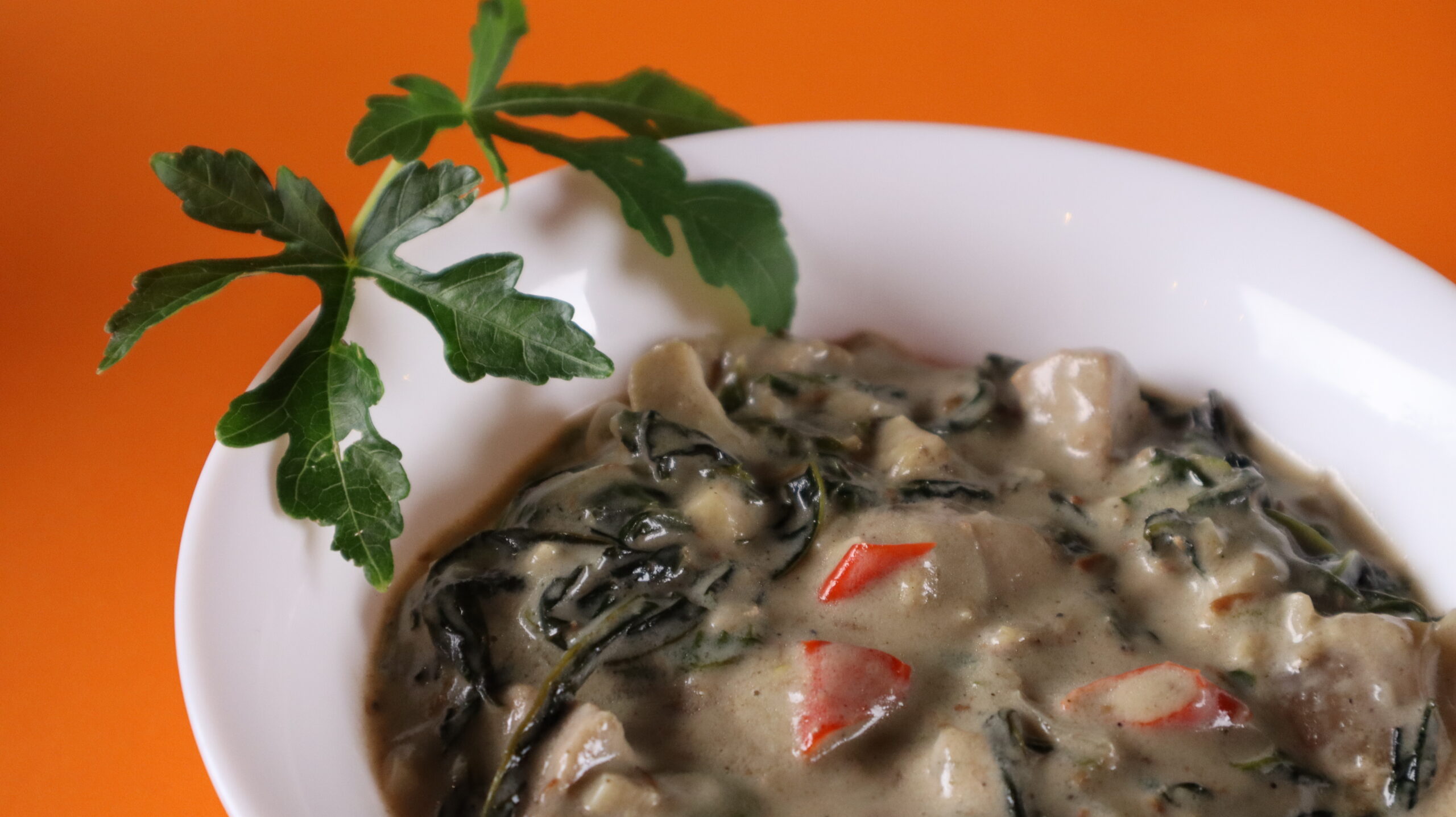
Growing your own lagikway at home provides a sustainable and inexpensive source of fresh produce, ensuring a continuous supply for your culinary needs. This practice reduces grocery expenses and minimizes environmental impact, offering a rewarding way to achieve food self-sufficiency.
You will need:
Pot or recycled container
Loamy soil
Hand trowel (small gardening shovel)
Water
Lagikway seeds or stem cuttings
Instructions:
- Prepare a pot or recycled container with loamy, garden soil with compost and your Lagikway stem cuttings.
- Grow for 3-4 weeks so they can grow roots before transferring to a larger container or garden.
- Prepare your new container with loamy, garden soil with compost or garden soil with a 12-15 cm deep hole before replanting.
- Carefully start to take out the grown cuttings and transfer them to the new container or soil, then cover the hole with more of the soil mixture. Water the plant immediately after replanting.
- Adequately water your plant, more frequently in the hot season, while providing partial shade, but avoid overwatering.
- Use organic fertilizers like compost and fermented plant juice to promote its growth.
Download the print version of the Ani At Hapag website below. It includes all the same information you’ll find here. Perfect for reading offline or sharing in print!
CONTACT US
- National Capital Region, Philippines
- projectaniathapag@gmail.com
- ANI AT HAPAG, 2025